

Vertical Video: How to Master the Format Redefining Video Marketing
Think vertical video is just a trend? Think again, here’s why it’s the future of storytelling.
Back in the day, whenever I saw someone taking photos or videos without flipping their phone horizontally, I’d ‘tut’ quietly to myself. Don’t they realise TVs are horizontal? Rookie error I thought, shaking my head.
Fast forward to today, and the joke’s on me. Vertical video is no longer just a casual oversight.
It’s the current reigning champion of modern storytelling. I’m not laughing anymore. For the past few years, I’ve been learning how to embrace this new orientation that’s completely flipped our approach to video content, pun intended.
Vertical video has evolved from a social media quirk to a cornerstone of digital strategy.
It’s not just a format, it’s a deliberate choice that aligns with how people interact with their devices and consume content.
Let’s explore how this change has redefined storytelling and how your business can benefit.
Why Vertical Video is Here to Stay
1. Enhanced User Engagement
Over 94% of smartphone users hold their devices vertically.
This makes vertical video a natural fit for mobile-first consumption. This seamless alignment boosts engagement by allowing viewers to consume content intuitively. Leading to higher watch and interaction rates.
2. Higher Conversion Rates
Vertical videos are proving to be a conversion powerhouse:
- 90% completion rates compared to horizontal videos.
- 150% better click-through rates for vertical video ads.
- Less than 30% of users turn their phones sideways to watch an ad, emphasizing the importance of optimising for vertical viewing.
3. Adaptation to Platform Trends
Vertical video isn’t just a trend.
It’s a response to the success of platforms like TikTok, Snapchat, and Instagram Reels.
These platforms prioritise vertical formats in their algorithms, ensuring greater reach and visibility for content designed to fit the screen.
Platform-Specific Vertical Video Strategies
To maximise impact, creators and brands must tailor their vertical video strategies to each platform:
TikTok
- Best Content: Challenges, user-generated clips, and authentic, raw content
- Audience: Primarily Gen Z but expanding.
- Suggestions: Engage with the trends, use popular music, and create entertaining, digestible content. Humour helps


- Best Content: Polished IGTV episodes, interactive Stories, and visually stunning Reels.
- Audience: Millennials and Gen Z with a focus on aesthetics.
- Suggestions: Balance high-quality visuals with relatable storytelling.
Snapchat
- Best Content: Filters, lenses, and quick, real-time updates.
- Audience: Predominantly younger millennials and Gen Z.
- Suggestions: Use innovative lenses and concise, engaging Snap Ads.


YouTube Shorts
- Best Content: Tutorials, quick tips, and viral challenges.
- Audience: Broad, from kids to adults and plenty of cats.
- Suggestions: Use Shorts to highlight long-form content and create value-packed snippets.
- Best Content: Live videos and community-focused updates.
- Audience: Older millennials and above.
- Suggestions: Focus on community engagement through interactive content.

Check Your Digits: Goals & KPIs
To measure success, focus on clear objectives and metrics:
1. Increase Brand Awareness
- Reach (unique viewers)
- Impressions (total views)
- Brand mention volume
2. Enhance Engagement
- Engagement rate (likes, comments, shares)
- Video completion rate
- Shares and reposts
3. Drive Website Traffic
- Traffic volume from video
- Click-through rate (CTR)
- Bounce rate
4. Generate Leads
- Conversion rates from leads to customers
- Lead generation rate
5. Strengthen Community Building
- Follower growth
- Sentiment analysis
- Customer retention rates
Building a Vertical Video Strategy
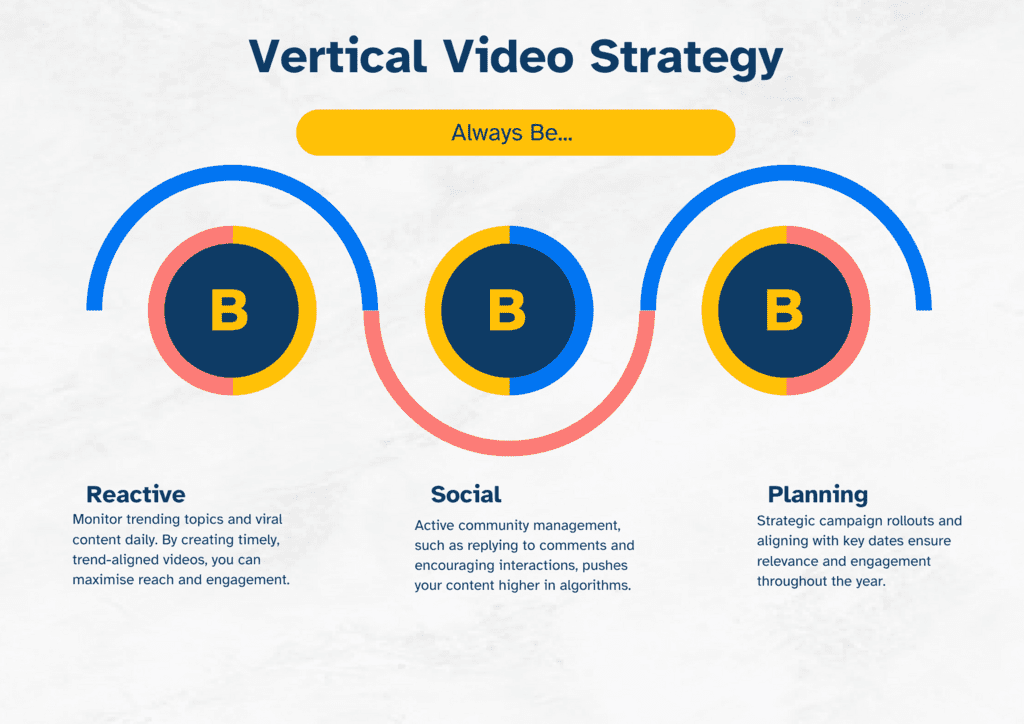
1. Be Reactive
Monitor trending topics and viral content daily. By creating timely, trend-aligned videos, you can maximise reach and engagement.
2. Be Social
Active community management, such as replying to comments and encouraging interactions, pushes your content higher in algorithms.
3. Be Planning
Strategic campaign rollouts and aligning with key dates ensure relevance and engagement throughout the year.
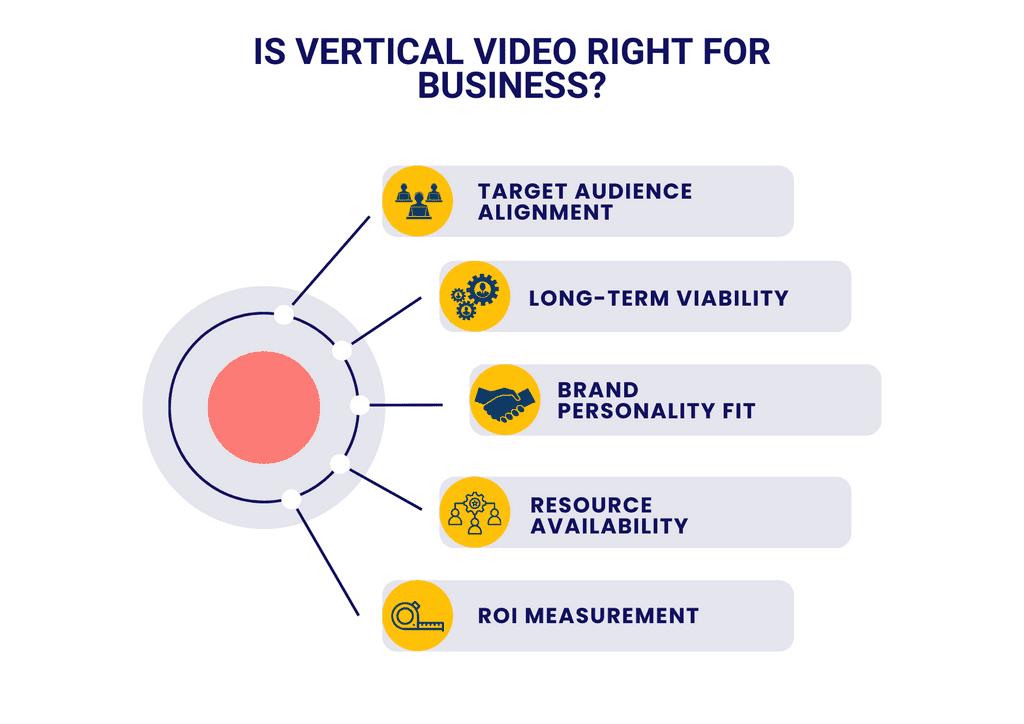
Is Vertical Video Right for Your Business?
Before diving headfirst into vertical video, consider the following questions:
1. Target Audience Alignment
Are your consumers active on vertical video platforms like TikTok or Instagram?
Action Step: Research platform demographics to confirm relevance.
2. Long-Term Viability
Can vertical video sustain your content strategy as trends evolve?
Action Step: Plan for adaptability and innovation.
3. Brand Personality Fit
Does your brand thrive in the playful, immersive nature of vertical content?
Action Step: Ensure your tone matches the medium.
4. Resource Availability
Do you have the team and tools to produce high-quality vertical videos?
Action Step: Evaluate your budget, manpower, and technical capacity.
5. ROI Measurement
Can you measure the effectiveness of your vertical video efforts?
Action Step: Use analytics tools to track reach, engagement, and conversions.
That’s a Wrap
Don’t underestimate the value of vertical video for businesses. It’s a tool to build brand awareness, create audience connection and drive long-term loyalty.
By focusing on creative, engaging content tailored to the platform and audience, your brand can tap into the potential of vertical video. Ensuring you stay ahead of the competition.
If you want to discuss how a vertical video strategy could change your company’s fortunes then book a free discovery call here.