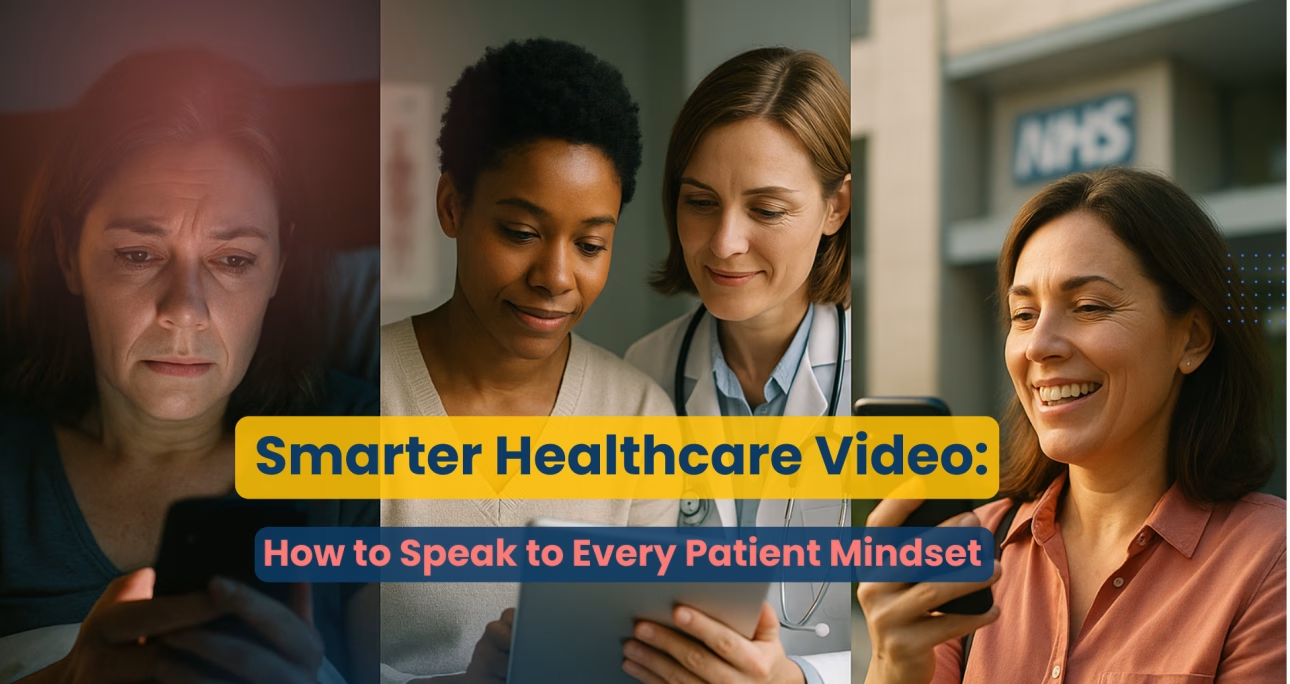
Smarter Healthcare Video: How to Speak to Every Patient Mindset
It’s Not About Perfect Timing, It’s About Emotional Relevance
When someone’s health is at stake, they’re not scrolling for content, they’re searching for clarity, reassurance, or a reason to hope.
Years ago, I saw the NHS’s Act FAST stroke campaign. It was just 30 seconds long, but it landed with lasting impact. The message stayed with me and still does. That’s the power of a healthcare video that connects emotionally, not just clinically.
https://www.youtube.com/watch?v=XCEaL7w6iEE&ab_channel=TheHillingdonHospitalsNHSFoundationTrust
The most effective video strategies in healthcare don’t target demographics. They speak to mindsets. From people in crisis to those quietly exploring treatment, or those putting off care altogether, great video meets them where they are.
In this post, we explore how to align your healthcare video strategy with three critical patient mindsets: Emergency, Elective, and Preventive. We share real examples of how this approach drives impact and trust.
Emergency Care: Supporting People in Panic
Emotion: Fear, urgency, helplessness.
Behaviour: Searching for immediate help, rapid reassurance.
Goal: Build trust quickly, reduce fear, and direct to safe action.
Real Story
I remember seeing the NHS Act FAST stroke video for the first time, and it shocked me. The clarity and seriousness of the message stuck. To this day, I haven’t forgotten the signs of stroke. That’s the power of emotionally intelligent content.
What Works
- Real survivor stories
- Short, urgent explainer videos
- ‘Meet the team’ reassurance videos
- Emergency department content for waiting rooms
64% of A&E patients waited over four hours in 2024, with nearly half saying they couldn’t get help while waiting. Video can fill that silence.
— CQC
Emotional Triggers
- Relief (‘Help is nearby’)
- Immediacy (‘Act FAST, Call now’)
- Authority (NHS logos, uniforms, hospital visuals)
Video Example: NHS Act FAST Stroke Campaign
A masterclass in urgency, behaviour-triggering, and recall. Watch here:
https://www.youtube.com/watch?v=zwdpVIKgJqE&ab_channel=NHS
Elective Care: Helping People Make the Right Choice
Emotion: Hopeful, vulnerable, seeking clarity.
Behaviour: Researching, comparing, hesitating.
Goal: Reassure, inform, and support decisions
Real Story
I still work on the TV show Bad Skin Clinic, and we consistently hear from patients who say: “Seeing someone like me get treatment from Dr Emma gave me hope.” These videos don’t just show outcomes, they give people the belief that change is possible.
The Bad Skin Clinic is a British reality medical series airing on the Really channel, featuring consultant dermatologist Dr. Emma Craythorne and her team as they treat patients with severe and often stigmatised skin conditions.
Filmed at OneWelbeck Skin Health & Allergy in London, the show delves into the physical and emotional challenges faced by individuals with complex dermatological issues. Through advanced treatments and compassionate care, the series highlights transformative journeys, aiming to raise awareness and reduce the stigma associated with skin disorders.
https://www.youtube.com/watch?v=iBZ08TtJkI0&t=117s
What Works
- Patient success stories
-
- Consultant introduction videos
- Clean, high-quality educational explainers
- Treatment walk-throughs (‘What to expect’)
- Clean, high-quality educational explainers
91% of people say video quality affects brand trust, which a crucial for private or elective care providers.
— Wyzowl
Preventive Care: Nudging People Into Action
Emotion: Disengaged, avoidant, under-informed Behaviour: Procrastination, avoidance, fear of discomfort Goal: Inspire action, reduce shame, normalise the process
Real Story
Years ago, we created a testimonial video for St John’s Hospice featuring Mohamed, a terminally ill patient. It was raw, emotional, and beautiful. We later heard that many other families chose the hospice after watching it because it offered hope, not just care.
What Works
- Peer-led social videos
- Birthday or life event nudges
- ‘What happens at your screening?’ explainers
- Calm, welcoming testimonials from staff and patients
1 in 3 eligible people skip cervical screening; 42% cite embarrassment, and 63% admit nervousness. Video can open the door.
— Gov.uk
Emotional Triggers
- Hope (“Stay healthy for your family”)
- Belonging (“Others are doing this”)
- Ease (“Only takes 5 minutes”)
Video Example: Scarlett Moffatt on Cervical Screening (Help Us Help You)
Scarlett Moffatt, TV personality and former Gogglebox star, shares her powerful personal story in support of the NHS and Department of Health’s “Help Us Help You” campaign. After cervical screening detected abnormal cells linked to cancer, she underwent treatment that may have saved her life.
This campaign highlights how quick, simple screenings can prevent cervical cancer before it starts. Nearly 1 in 3 people skip their screening — often due to embarrassment or fear — but early detection saves lives.
Key messages:
Screening is fast and can prevent 70–83% of cervical cancer deaths
It’s for all people with a cervix, regardless of gender identity
If you missed your last appointment, book it now with your GP or clinic
Scarlett’s voice is part of a wider effort to break stigma, encourage attendance, and reach communities with lower uptake.
Relatable, warm, stigma-reducing messaging done right. Watch, share, and help save lives.
https://www.youtube.com/watch?v=px86E4H4xRk&ab_channel=FabulousMagazine
Behaviour Models to Guide Your Strategy
- COM-B Model: Capability (show them how), Opportunity (make it easy), Motivation (give them a reason)
- EAST Framework: Easy, Attractive, Social, Timely
- Fogg Behaviour Model: Behaviour = Motivation + Ability + Trigger

From Video Content to Care Pathways
Video content should do more than explain. It should empower. When you align your content with patient mindsets, not just services, it becomes an act of care, not just communication.
At Visualante Creative, we craft emotionally intelligent video strategies that speak to what patients feel, not just what marketers think. Whether you’re looking to boost uptake, improve outcomes, or build deeper trust, we’re here to help you speak to patients where it counts.