
5 Proven Ways to Make Your Healthcare Videos Convert Emotionally
Viewers retain 95% of a message when delivered via video but only 10% through text. Yet, many healthcare videos still underperform because they focus on looking fancy rather than creating an authentic connection.
If you’re serious about making healthcare videos that don’t just look great but can change minds, inspire action, and save lives, you’re in the right place.
According to Wyzowl, 82% of people have been convinced to take action after watching a brand’s video.
— https://www.wyzowl.com/video-marketing-statistics/
The Problem with Most Healthcare Videos
Most healthcare organisations invest in video but skip the strategy.
The result?
- Videos that are pretty but forgettable.
- Generic messaging that doesn’t land.
- Missed opportunities to build trust and inspire action.
In a sector where emotion and credibility are critical, a surface-level video won’t inspire action.
Research from Kartoffel Films highlights how emotional storytelling drives both memory and trust in healthcare communication.
— https://kartoffelfilms.com/blog/10-brilliant-healthcare-marketing-videos/
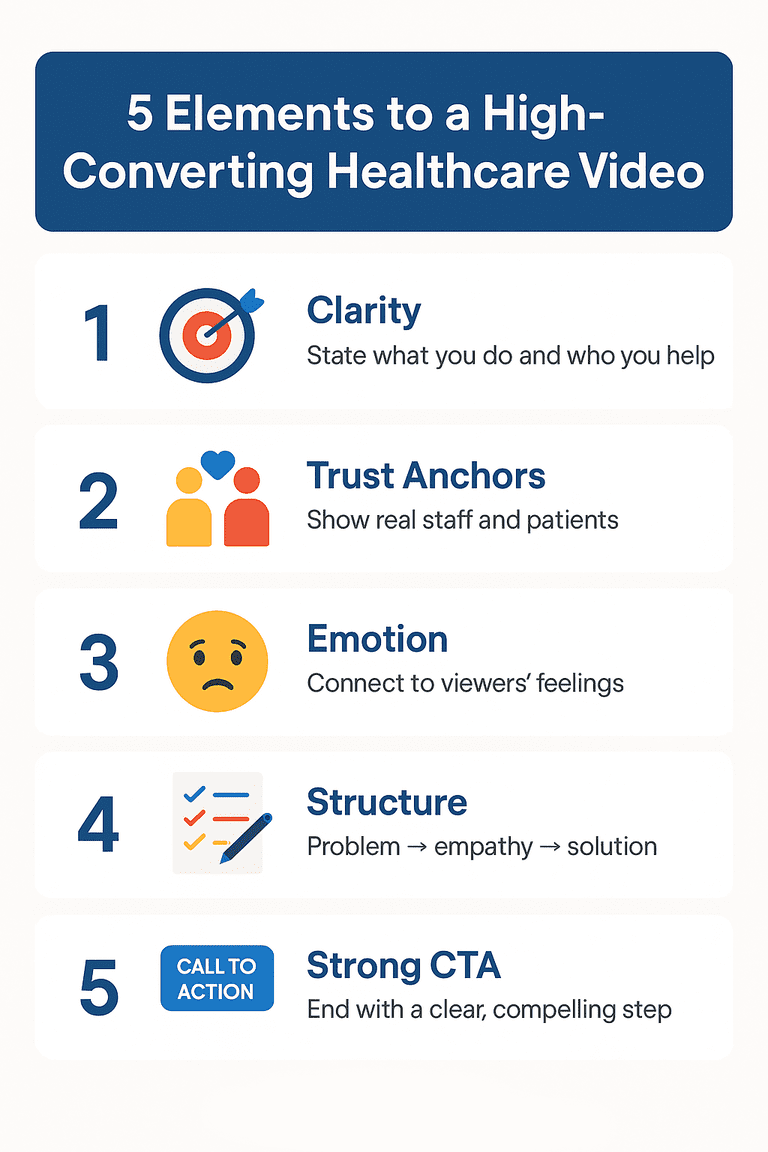
The 5 Strategic Elements of High-Converting Healthcare Videos
1. Clarity: The Power of Simplicity
In healthcare, confusion is the silent killer that sabotages conversions.
Whereas successful videos immediately answer:
- Who are we?
- What do we offer?
- Why should you trust us?
Example:
In the NHS ‘Help Us Help You’ Heart Attack Symptoms Awareness Campaign, the first 10 seconds highlight symptoms viewers should not ignore, alongside an immediate reassurance: “NHS services are still open and safe.”
There’s no jargon, no guesswork, just a crystal-clear message.
Tip:
Use simple language, supportive visuals (like clean icons or real faces), and aim to define your purpose within the opening moments.
2. Build Trust: Prioritise Authenticity Over Perfection
In healthcare, trust is everything.
High-converting videos feature real people, real stories, and a tone of honest care.
Patients are wary of overproduced marketing because it’s everywhere. They want to see genuine expertise and genuine compassion.
Example:
In the Norwich City FC & Samaritan’s: ‘Check in on those Around You’ video
Campaign, the story unfolds in a football stadium, featuring ordinary fans, no actors, no filters. The rawness and subtle vulnerability build trust fast. Over 40 million views prove it resonated deeply.
As a lifelong Norwich City fan myself, this campaign struck an even deeper chord. Seeing my club use its platform so authentically to support mental health awareness reminded me why real, relatable storytelling matters. It connects with people where they already feel safe and understood.
Tip:
Prioritise authenticity over gloss. Let your real staff, real patients, and real moments shine through. Trust builds action.
3. Emotion: Make Them Feel Before You Make Them Act
Healthcare decisions are rarely logical, they’re emotional.
The best healthcare videos tap into core emotions: fear, hope, relief, pride, or love.
Example:
The NHS Blood and Transplant ‘Waiting to Live’ Campaign used the heart-wrenching visual of empty hospital dolls representing real children waiting for organ donations.
Viewers weren’t just informed, they were moved, leading to a 10% increase in under-18 donor registrations.
Tip:
Tell human stories, not hospital statistics. Connect to the viewer’s heart first, then their head.
4: Structure: Story First, Always
Great healthcare videos are built like great stories:
Start with a relatable problem.
Show empathy and understanding.
Present your solution.
End with a clear action step.
As storytelling expert John Yorke (author of Into the Woods) puts it:
“Storytelling is an essential human need. It’s how we make sense of the world. It’s the way we impose order on chaos.”
In healthcare, storytelling isn’t just about entertainment, it’s about helping patients make sense of their fears, hopes, and choices.
A clear narrative structure gives viewers emotional safety and logical clarity, making it far easier for them to trust you and take action.
Example:
The Better Health – Every Mind Matters Campaign nails this arc:
Problem ➔ Empathy ➔ Solution ➔ Clear CTA.
Tip:
Respect your viewer’s time and emotional journey. Structure is not a restriction, it’s the foundation that makes emotional connection possible.
5. Strong Calls to Action (CTAs): Be Direct & Be Clear
You’ve built emotion, trust, and understanding. Now, guide your viewer.
Without a CTA, even the best video is just entertainment.
Example:
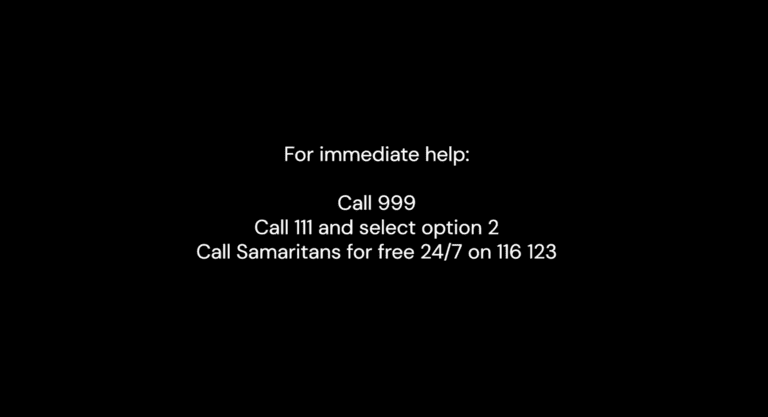
In the Samaritans & Norwich video, the CTA isn’t a heavy-handed sales pitch. It’s a heartfelt instruction:
“Check in on those around you. For immediate help, call Samaritans.”
Simple, compassionate, and specific.
Tip:
Place your CTA visually and verbally. Repeat it. Make it easy for the viewer to act, not an afterthought.
How Visualante Creative Helps Healthcare Organisations Get It Right
At Visualante, we don’t believe in filming first and figuring it out later.
We prefer to:
- Develop patient-first strategies created for your audience.
- Focus on emotional connection and clear outcomes.
- Help you script, shoot, and edit with trust, clarity, and action in mind.
That’s how our clients move from having ‘nice videos’… to having impactful content that drives real-world results.
If your video doesn’t make your viewer feel something, trust you, and know what to do next, it’s not finished yet.
You don’t need more content.
You need content that converts.
And it starts with telling real stories, for real people, with real care.