
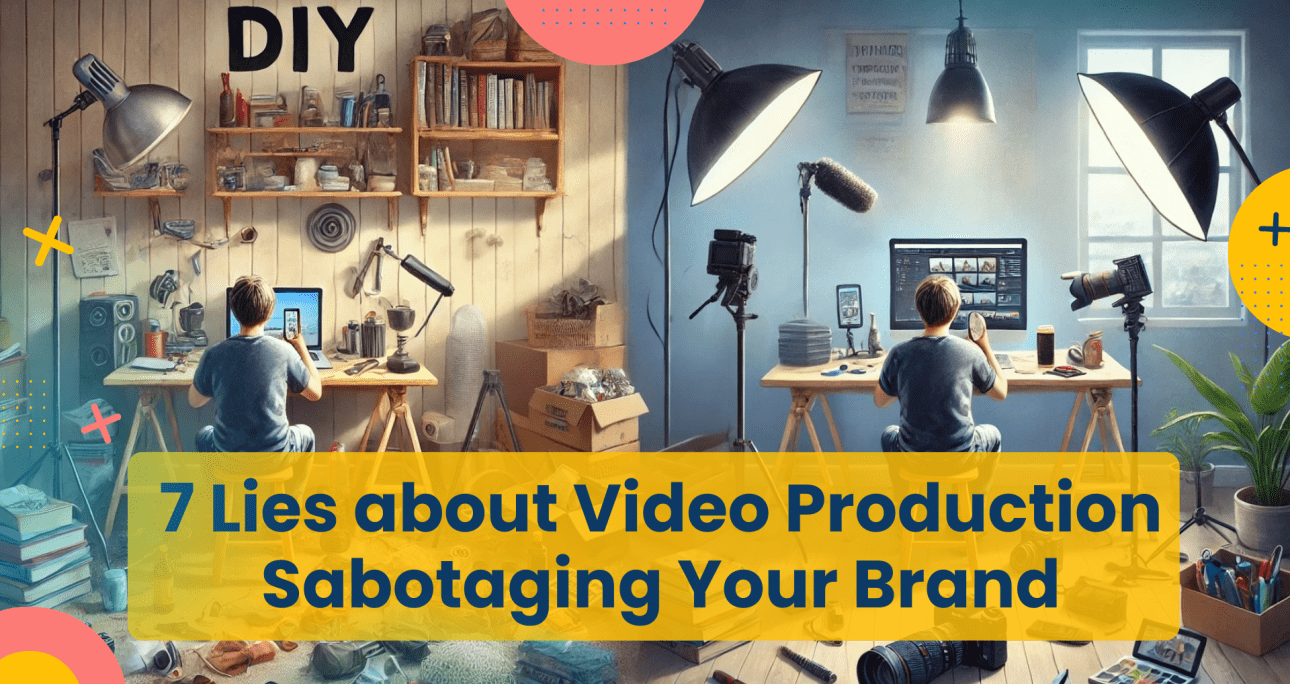
7 Lies about Video Production that are Sabotaging Your Brand
There are many lies about video production doing the rounds online, believing them could harm your brand’s image and content strategy.
From shaky smartphone videos to the myth that professional production is out of reach. Misconceptions about video production are everywhere.
Let’s debunk seven of the most common lies I hear far too often. This will help you create great videos that solve your communication problems and drive results.
Lie 1: “Anyone can make a great video with their phone.”
Sure, anyone can make a video with their phone, but a great video? That’s a different story. Smartphone footage often suffers from the following:
- Shaky visuals that scream “amateur”.
- Poor lighting that hides details or washes out colours.
- Subpar audio that’s muffled or overwhelmed by background noise.
It all looks the same because phone lenses and sensors are much smaller than those on dedicated cameras with interchangeable lenses.
Professional production ensures your video looks fantastic and communicates quality. This will give your customers the right impression of your business.
Lie 2: “Editing is just cutting clips together.”
This myth simplifies one of the most intricate and creative parts of video production. Editing is far more than simply assembling clips. When done right, it’s an art form:
- Crafting a story that holds attention.
- Syncing visuals with sound for emotional impact and powerful pacing.
- Adding finishing touches like colour grading, music, and graphics to create a polished video that looks and sounds professional.
Editing transforms raw footage into a visual masterpiece. It’s the difference between a watchable video and one that gets ignored.

Lie 3 “You can just wing it on the day.”
As the saying goes, fail to prepare, prepare to fail. Without preparation, your shoot can quickly turn chaotic. “Winging it” often leads to:
- Missed moments and awkward pauses.
- Hours of wasted time, energy, and footage.
- Post-production nightmares as editors scramble to find the story.
Professional video production relies on thorough pre-production planning, including shot lists, scripts, and schedules, ensuring a smooth process and a high-quality result.
Lie 4: “Scriptwriting isn’t necessary, we’ll just speak from the heart.”
Speaking from the heart may sound authentic on paper. But unless your speakers are naturals or experienced in such situations it often results in:
- Rambling and losing focus.
- Overuse of filler words like “um” and “uh”.
- Forgetting critical points or miscommunicating the message.
A well-written script ensures your key messages are clear, concise, and impactful. This doesn’t mean your talent sounds wooden, insincere, or inauthentic.

Lie 5: “Professional video production is too expensive.”
The real question is: compared to what? The right video strategy delivers a strong return on investment. On the other hand, DIY disasters and low-quality videos can:
- Damage your brand’s reputation.
- Fail to engage your audience or achieve the results you wanted.
- Waste time, money, and confidence, often requiring additional costs for re-shoots or extensive edits.
Investing in professional production saves time, builds trust, and provides measurable returns through improved messaging, engagement, and conversions.
Lie 6: “We’ll fix it in post.”
The phrase “we’ll fix it in post” is often used as an excuse for poor planning. Unfortunately, not everything can be fixed in post-production. Common issues include:
- Overexposed or underexposed footage that is difficult to save.
- Poorly recorded audio is often more damaging than bad video footage.
- Poor framing, focus, or camera movement.
These are nearly impossible to correct later. Solid pre-production planning ensures the shoot goes smoothly, reducing the need for costly re-shoots and extensive editing time.

Lie 7: “Videos are only for marketing purposes.”
While videos are a powerful marketing tool, their applications go far beyond advertising. Consider using video for:
- Internal communications: company updates, employee training, or leadership messages.
- Customer support: tutorials, product demos, and troubleshooting guides.
- Recruitment: showcasing company culture or creating job-specific overviews.
This list barely scratches the surface. Videos are a versatile medium for communication, enhancing various aspects of your business, not just marketing.
The Truth About Video Production
Quality video content is an investment in your company’s future. By learning the truth behind these seven lies, you can create videos you are both proud of and deliver the results you want.